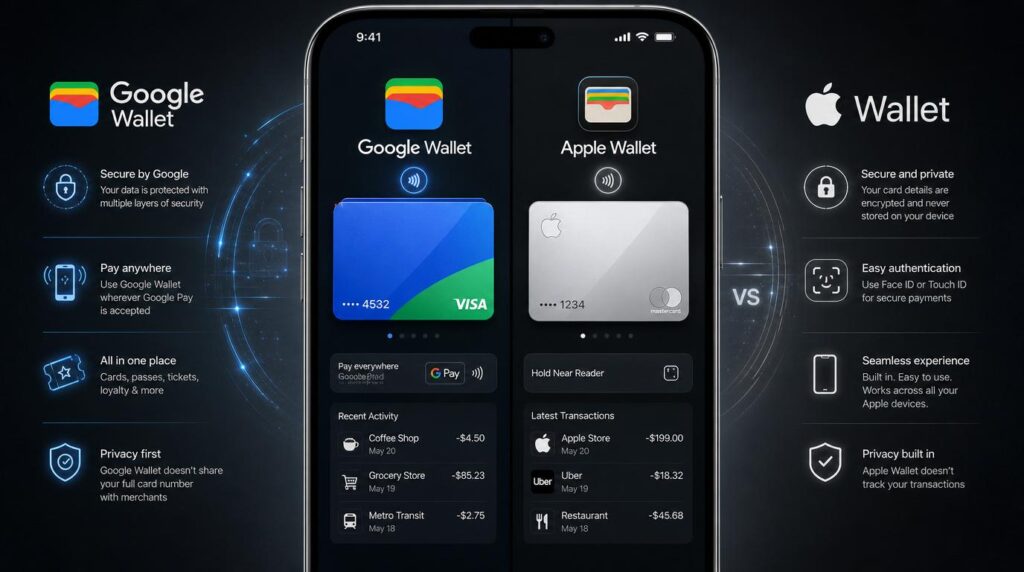
Digital wallets like Apple Wallet and Google Wallet are useful for payments, tickets, and passes. However, they do not solve one common coupon problem: saving promo codes, screenshots, and discount links in one place where you can actually find them later.
I can’t even count how many times I’ve reached the checkout in an online store and knew for sure that I had a 15% discount code somewhere, but had absolutely no idea where it actually was. Maybe buried in my inbox, saved as a random screenshot on my phone, or lost somewhere in a group chat.
Most of the time, I leave the page and search through my email inbox. If the whole thing annoys me too much, I simply Google the name of the store in the hope of finding another code, and almost always end up on some overloaded coupon site full of expired links and annoying pop-ups.
As it turned out, I’m not alone in this. I realized that friends and family struggle with exactly the same problem, and people online are constantly complaining that they can no longer find good discounts at the exact moment they need them. Retailers are now actually sending out many useful, personalized codes. But because they get lost among countless daily notifications, they are hardly findable anymore once you actually want to buy something.
So we started looking for a solution. At first, we thought we could simply use Apple Wallet or Google Wallet; after all, we already use them for boarding passes and credit cards.
But that is not what they are made for. Promo codes do not have a standardized format. You find them in YouTube descriptions, Reddit threads, Instagram captions, or even by mail. Because they are so scattered, they cannot simply be imported into a traditional digital wallet.
Since there was no good system for organizing all of this, we developed CouponCrowd. Essentially, it is a digital wallet specifically for promo codes. The goal is to have one central place where you can save a code immediately—whether it comes from an email, a social media post, or a letter—so that you no longer have to search for it later.
At its core, a digital wallet is simply an app that securely stores digital versions of physical items. The goal is simple: convenience, security, and less clutter in your pocket. Most of us already use them to store things like:
Although they belong to competing ecosystems, Apple’s and Google’s wallets were developed for exactly the same reason: secure payments and official digital credentials.
This is Android’s integrated system. Its main purpose is to handle payments and store official digital passes issued directly by companies.
Payments: Contactless NFC payments, in-app checkouts, and secure storage of your card details.
Digital passes: Boarding passes, event tickets, public transport tickets, loyalty cards, and student IDs.
Travel: Real-time flight updates and tap-to-ride access on public transport.
Security: Device encryption and the option to remotely lock or erase your phone.
This is the equivalent system for iPhone and Apple Watch.
Apple Pay: Contactless in-store payments, online checkouts, and biometric security such as Face ID or Touch ID.
Digital storage: Boarding passes, transport tickets, hotel and car keys, and, in some regions, government-issued IDs.
Express Mode: Allows you to tap and use a transport ticket without unlocking your iPhone.
Both tech giants primarily designed their wallets to replace credit cards. But this exact focus on payments creates a major blind spot when it comes to actually saving money:
– Merchants must explicitly support the relevant wallet integration.
– That is exactly why we realized we needed a completely different kind of app.
The app does not store credit cards. Its only purpose is to rescue your discounts from the chaos of your inbox. It was designed to securely store and manage:
– Text-based discount and promo codes
– Screenshots of coupons from social media
– Promotional offers from emails
– Paper coupons, simply by taking a photo
– Discount codes shared by the community
Unlike Google and Apple, which require highly formatted official files, CouponCrowd is built for the flexible, messy reality of real-world coupons.
Traditional wallets are designed to make payments easier. We developed CouponCrowd to help you keep more of your money. Here are the reasons why promo codes require their own system:
1. Coupons are completely unstructured
Promo codes do not follow any rules. You find them in cluttered email newsletters, Instagram captions, TikTok videos, or simply on a printed flyer. Google and Apple Wallet require strictly formatted “digital pass” files. CouponCrowd, on the other hand, was built to handle exactly this chaos, so you can save offers no matter what unusual format they appear in.
2. They have extremely short lifespans
Your credit card might expire every four years. A 20% discount code, however, can become invalid after just 24 hours. CouponCrowd focuses entirely on the lifecycle of a discount, including expiration tracking, community validation, and automatic separation of active and expired deals.
3. They come from everywhere
Today, we are practically flooded with discounts from influencers, brands, websites, and community forums. Traditional wallets cannot bring together all these random sources. CouponCrowd acts as a central collection point, bringing all these scattered offers together in one place.
4. Discovery vs. storage
Google and Apple Wallet only store what a company explicitly and directly sends to your smartphone. They are passive. CouponCrowd is active. You can specifically search for store discounts and access codes shared by the community, with the focus being just as much on discovery as on storage.
Google Wallet = A secure payment system for Android.
Apple Wallet = A secure payment system for Apple devices.
CouponCrowd = A smart organizer that collects and manages discount codes and reminds you in time so you never miss a deal.
Digital wallets replace your physical wallet. CouponCrowd replaces your overcrowded inbox full of lost promo codes. Paying and saving are two completely different problems, and they need different tools. Apple and Google help you pay. CouponCrowd helps you pay less.
Get the Latest Version
Update or download CouponCrowd today and try the new support chat directly inside the app.
Learn how to add your coupons to CouponCrowd
We use cookies to improve your experience on our site. By using our site, you consent to cookies.
Manage your cookie preferences below:
Essential cookies enable basic functions and are necessary for the proper function of the website.
Google Tag Manager simplifies the management of marketing tags on your website without code changes.
Statistics cookies collect information anonymously. This information helps us understand how visitors use our website.
Google Analytics is a powerful tool that tracks and analyzes website traffic for informed marketing decisions.
Service URL: policies.google.com (opens in a new window)
Marketing cookies are used to follow visitors to websites. The intention is to show ads that are relevant and engaging to the individual user.
TikTok Pixel tracking